Ammonium nitrate is widely used as a nitrogen fertilizer, but its relationship with human health is more complicated than the simple question of whether the chemical is “dangerous” or “carcinogenic.”
The reason ammonium nitrate appears in health discussions is largely connected to nitrate exposure. Ammonium nitrate contains nitrate, and fertilizer use can contribute to nitrate movement through soil and into groundwater or surface water. Once nitrate enters the human body, part of it can be converted to nitrite, which may participate in chemical reactions that produce N-nitroso compounds under certain conditions.
Some N-nitroso compounds are known carcinogens. IARC has therefore classified ingested nitrate or nitrite under conditions that result in endogenous nitrosation as probably carcinogenic to humans. However, this classification should not be simplified to mean that ammonium nitrate itself is a proven human carcinogen.
Understanding the difference between these substances is essential for interpreting the available evidence.
What Is Ammonium Nitrate?
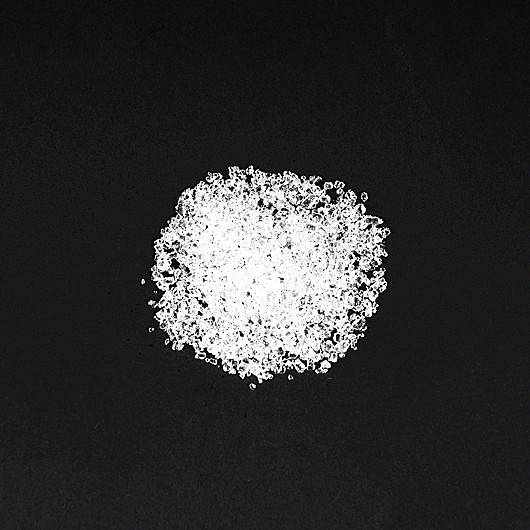
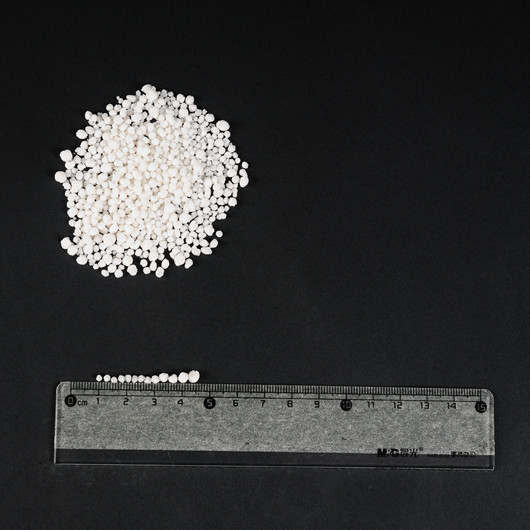
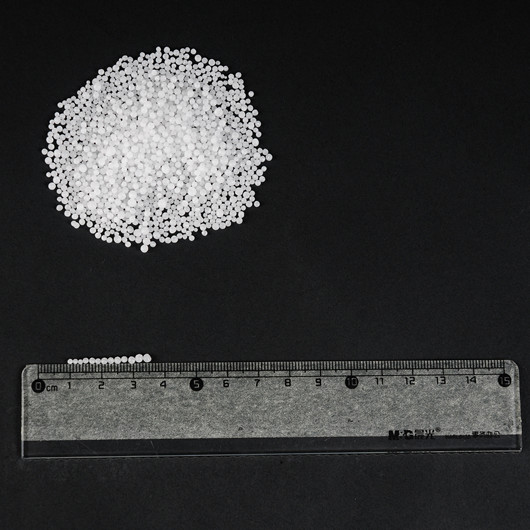
Ammonium nitrate is an inorganic salt with the chemical formula NH₄NO₃. It contains ammonium ions and nitrate ions and is widely used as a source of nitrogen for agricultural crops.
Its value as a fertilizer comes from its high nitrogen content and the availability of both ammonium and nitrate forms of nitrogen. Plants require nitrogen for growth and use it to produce proteins, nucleic acids, chlorophyll, and other essential compounds.
Ammonium nitrate should not, however, be confused with nitrate itself.
| Substance | Formula | Description | Relevance |
|---|---|---|---|
| Ammonium nitrate | NH₄NO₃ | Inorganic salt | Agricultural nitrogen fertilizer |
| Nitrate | NO₃⁻ | Nitrogen oxyanion | Environmental and dietary exposure |
| Nitrite | NO₂⁻ | More reactive nitrogen oxyanion | Can form from nitrate in the body |
| N-nitroso compounds | Various | Broad group of chemical compounds | Some members are carcinogenic |
This distinction becomes particularly important when discussing cancer research.
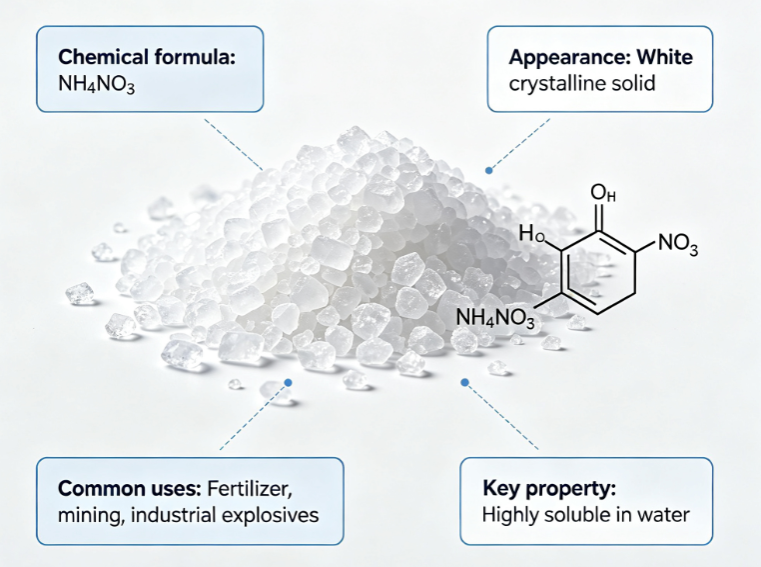
What Is Ammonium Nitrate
Why Is Ammonium Nitrate Used as a Fertilizer?
Nitrogen is one of the main nutrients required for plant growth. Ammonium nitrate provides nitrogen in forms that can enter the soil nitrogen cycle and become available to crops.
Under appropriate agricultural management, fertilizer nitrogen can improve crop growth and productivity. The environmental concern arises when nitrogen application exceeds what crops and soil systems can retain or use.
Excess nitrogen can move through soil, enter groundwater, or reach surface water. EPA identifies fertilizer runoff and other nitrogen sources as contributors to elevated nitrate in groundwater and drinking-water sources.
This means the potential human-health pathway is generally indirect:
fertilizer application → nitrogen transformation and movement → nitrate in water or food → human exposure
It is therefore misleading to assume that using ammonium nitrate fertilizer automatically means people are directly exposed to ammonium nitrate.
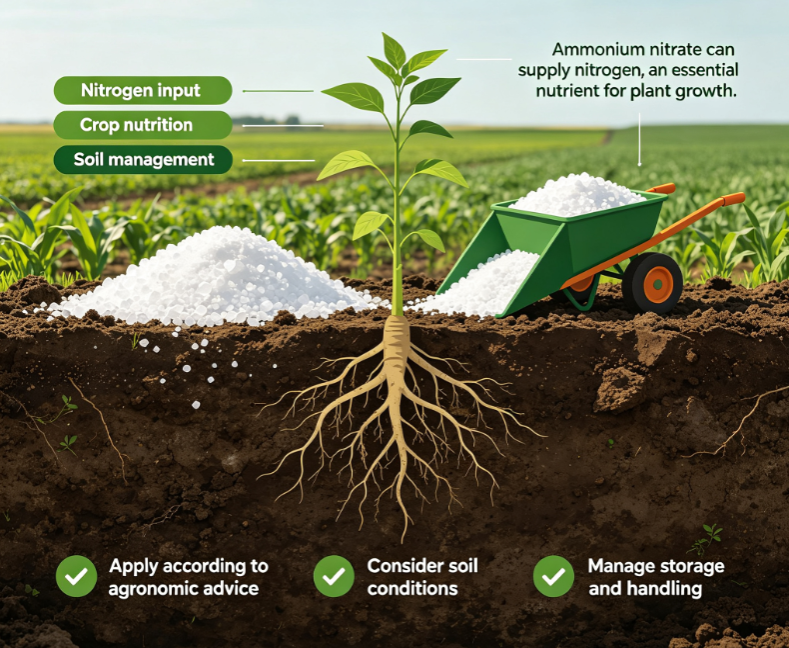
Ammonium Nitrate and Agricultural Fertilization
How Can Ammonium Nitrate Become a Source of Nitrate Exposure?
Nitrate is highly soluble and can move through soil with water. EPA materials identify ammonium nitrate and other inorganic fertilizers as potential sources of nitrate contamination in drinking water.
When fertilizer is applied to agricultural land, some nitrogen may be taken up by crops. Other nitrogen can undergo transformations in soil and eventually become nitrate.
Rainfall and irrigation can then transport nitrate downward through the soil. This process, known as leaching, can allow nitrate to reach groundwater.
Agricultural runoff can also carry nitrogen into streams, rivers, lakes, and reservoirs.
For people, drinking water can therefore become an important exposure pathway in areas where nitrate contamination is significant.
Ammonium Nitrate vs. Nitrate: What Is the Difference?
This is one of the most important distinctions in the entire topic.
Ammonium nitrate is a chemical compound. Nitrate is one of the ions contained within that compound.
When discussing human health, researchers may measure nitrate exposure from drinking water, food, or other environmental sources. Those findings should not automatically be interpreted as evidence about the toxicity of ammonium nitrate as a complete chemical product.
A useful way to understand the relationship is:
Ammonium nitrate → source of nitrate → environmental nitrate exposure
rather than:
Ammonium nitrate → directly causes cancer
The first describes a potential environmental pathway. The second makes a causal health claim that requires much stronger evidence.
What Happens to Nitrate in the Human Body?
Nitrate occurs naturally in food and the environment and can enter the body through food and drinking water.
After absorption, nitrate circulates through the body. A portion is concentrated in saliva and returned to the mouth. Oral bacteria can reduce some nitrate to nitrite.
The simplified pathway is:
Nitrate → oral bacteria → nitrite → stomach → nitrosation reactions
The resulting nitrite is chemically more reactive than nitrate and can participate in reactions under acidic conditions in the stomach.
IARC has described the interconversion of nitrate and nitrite as part of the human nitrogen cycle and has examined the possibility that nitrite-derived reactive species can contribute to endogenous formation of N-nitroso compounds.
However, a chemical pathway does not mean that every nitrate exposure produces a carcinogenic compound.
How Does Nitrate Become Nitrite?
The conversion of nitrate to nitrite is primarily associated with bacteria in the mouth.
After nitrate is consumed, some of it is secreted into saliva. Certain oral bacteria can reduce nitrate (NO₃⁻) to nitrite (NO₂⁻).
After the saliva is swallowed, nitrite enters the stomach.
This process matters because nitrite is more chemically reactive and can participate in additional reactions in the acidic gastric environment.
The nitrate-to-nitrite conversion can therefore be summarized as:
| Stage | Process |
|---|---|
| 1 | Nitrate is consumed |
| 2 | Nitrate enters the bloodstream |
| 3 | Some nitrate is concentrated in saliva |
| 4 | Oral bacteria reduce nitrate to nitrite |
| 5 | Nitrite is swallowed |
| 6 | Nitrite reaches the acidic stomach |
This biological pathway is one reason researchers study nitrate and nitrite together.
What Happens to Nitrite in the Stomach?
The stomach provides an acidic environment in which nitrite can generate reactive nitrogen species capable of participating in nitrosation reactions.
If suitable precursor compounds are present, these reactions can result in the formation of N-nitroso compounds.
IARC notes that nitrite-derived nitrosating agents can react with compounds such as secondary amines and amides, potentially generating N-nitroso compounds.
The important point is that several conditions have to be considered.
The amount of nitrate consumed is only one factor. The availability of precursor compounds, the chemical environment, and substances that inhibit nitrosation can also influence the process.
Consequently, the pathway should be regarded as a potential mechanism, rather than evidence that every nitrate exposure produces cancer-causing chemicals.
What Are N-Nitroso Compounds?
N-nitroso compounds are a broad family of chemical compounds. Some members of this group are established carcinogens, which is one reason endogenous nitrosation has attracted scientific attention.
The formation of N-nitroso compounds can involve nitrite and suitable precursor compounds under favorable chemical conditions.
However, N-nitroso compounds are not synonymous with nitrate.
The distinction can be summarized as follows:
Nitrate is an exposure compound.
Nitrite is a more reactive intermediate.
N-nitroso compounds can be products of nitrosation reactions.
Some N-nitroso compounds are carcinogenic.
This sequence is much more scientifically accurate than saying that nitrate itself is simply a carcinogen.
Does Nitrate Cause Cancer?
There is no scientifically responsible one-word answer.
IARC classified ingested nitrate or nitrite under conditions that result in endogenous nitrosation as probably carcinogenic to humans (Group 2A). The evaluation was based on mechanistic evidence together with human and experimental evidence.
The wording of the classification is important.
It does not say:
Ammonium nitrate is a proven human carcinogen.
It also does not say:
Every amount of nitrate consumed causes cancer.
Instead, the classification concerns nitrate and nitrite exposure under conditions in which endogenous nitrosation can occur.
This distinction should remain clear throughout any discussion of ammonium nitrate and cancer risk.
What Does Human Cancer Research Show?
Human epidemiological research has produced mixed findings.
A 2022 systematic review and meta-analysis examined nitrate and nitrite contamination in drinking water and cancer. Among the studies that could be quantitatively combined, the researchers found a positive association between nitrate exposure in drinking water and gastric cancer. They did not find an association with colorectal cancer or other cancer sites in their respective analyses. The authors also noted a lack of robust studies from settings with very high nitrate contamination.
Dietary studies are also complex.
A separate systematic review and meta-analysis covering 41 studies and 13 cancer sites found that associations varied by cancer type and by whether exposure involved nitrate or nitrite. For example, higher dietary nitrate intake was associated with thyroid cancer in one analysis, while some other cancer outcomes showed different or no significant associations.
These results illustrate an important point: nitrate and nitrite exposure cannot be treated as a single uniform cancer risk.
Drinking Water vs. Dietary Nitrate
The source of nitrate exposure matters.
Nitrate in vegetables occurs in a different chemical and nutritional context from nitrate in contaminated groundwater.
IARC has noted that vegetables can contain significant amounts of nitrate while also providing vitamin C and other compounds that can inhibit endogenous nitrosation. This is one reason dietary nitrate from vegetables should not automatically be equated with nitrate exposure from contaminated drinking water.
| Exposure source | Typical context | Important consideration |
|---|---|---|
| Vegetables | Natural dietary nitrate | Often consumed with vitamin C and polyphenols |
| Drinking water | Environmental exposure | Concentration and long-term exposure matter |
| Agricultural contamination | Indirect exposure | Fertilizer can contribute to environmental nitrate |
| Processed foods | May contain nitrate or nitrite additives | Other food components may affect nitrosation |
This distinction prevents an overly broad conclusion that all nitrate-containing foods should be avoided.
Can Ammonium Nitrate Contaminate Drinking Water?
Ammonium nitrate can contribute to nitrate contamination indirectly through agricultural use.
After fertilizer is applied, nitrogen can undergo transformations in soil. Nitrate is highly soluble and can move with water through the soil profile.
EPA explains that groundwater can pick up nitrogen as water moves through soil and that agricultural areas can be particularly vulnerable to nitrate contamination.
Private wells can be especially relevant because they may draw directly from groundwater.
In the United States, EPA's maximum contaminant level for nitrate is 10 mg/L measured as nitrogen (nitrate-N) in public drinking water. The standard is primarily designed to protect against acute infant health effects associated with methemoglobinemia.
This drinking-water standard should not be interpreted as a cancer threshold.
It addresses a different and well-established health concern.
What Are the Main Health Effects of High Nitrate Exposure?
The best-established acute concern associated with high nitrate or nitrite levels in drinking water is methemoglobinemia, commonly called blue baby syndrome.
Infants are particularly vulnerable because nitrate can be converted to nitrite, which can interfere with the blood's ability to transport oxygen.
EPA identifies high nitrate and nitrite concentrations in drinking water as a serious concern for infants, particularly those younger than six months.
Other potential long-term health effects, including cancer and cardiovascular or endocrine outcomes, continue to be investigated.
The strength of evidence varies substantially between health outcomes.
Why Exposure Level and Duration Matter
Risk assessment cannot be based on the presence of nitrate alone.
Researchers also need to consider:
concentration;
frequency of exposure;
duration of exposure;
exposure pathway;
age and susceptibility;
dietary context;
other chemicals present;
environmental conditions.
For example, occasional exposure to a small amount of nitrate from a food source is not equivalent to long-term exposure to elevated nitrate in contaminated drinking water.
This is one reason scientific studies often produce different results depending on the population and exposure definition.
Ammonium Nitrate vs. Other Nitrogen Fertilizers
Ammonium nitrate is only one type of nitrogen fertilizer.
| Fertilizer | Main nitrogen form | General characteristic |
|---|---|---|
| Ammonium nitrate | Ammonium + nitrate | Provides readily available nitrogen |
| Urea | Urea nitrogen | Must transform in soil before becoming available forms |
| Ammonium sulfate | Ammonium | Provides nitrogen and sulfur |
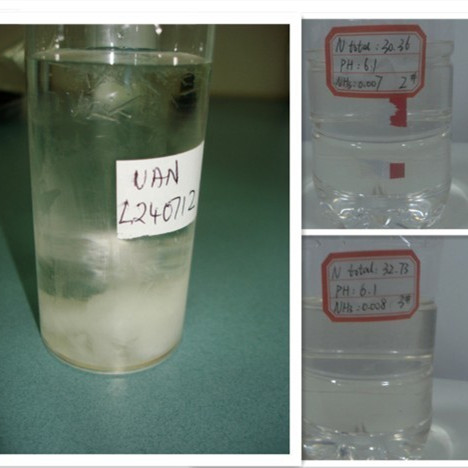
| UAN solution | Urea + ammonium nitrate | Liquid nitrogen fertilizer |
The environmental effect of a fertilizer depends on more than its chemical name.
Application rate, timing, soil characteristics, crop demand, rainfall, irrigation, and nitrogen-management practices can all influence how much nitrogen remains available to plants and how much is lost to the environment.
How Can Farmers Reduce Nitrate Loss?
The goal of responsible fertilizer management is to provide crops with enough nitrogen while reducing unnecessary losses.
Common approaches include:
matching nitrogen application to crop requirements;
considering soil nitrogen availability;
applying fertilizer at appropriate times;
avoiding unnecessary applications before heavy rainfall;
improving nitrogen-use efficiency;
managing irrigation carefully;
using practices that reduce runoff and leaching.
EPA notes that excessive fertilizer application can allow nutrients to move beyond their intended use and contribute to groundwater and surface-water pollution.
Reducing nitrate loss is therefore both an agricultural-efficiency issue and a water-quality issue.
How Can Consumers Reduce Nitrate Exposure?
For most consumers, completely avoiding nitrate is neither practical nor necessary.
A more useful approach is to understand the main exposure pathways.
People who rely on private wells in agricultural areas may want to test their drinking water for nitrate, particularly when local conditions suggest a contamination risk. EPA notes that private wells are not federally regulated in the same way as public water systems and that well owners are responsible for testing and treatment.
For dietary exposure, it is important to distinguish naturally nitrate-rich vegetables from contaminated water or other sources.
A diet containing vegetables should not be treated as equivalent to drinking nitrate-contaminated water.
Is Ammonium Nitrate a Carcinogen?
Ammonium nitrate should not simply be described as a proven human carcinogen.
It is an agricultural fertilizer that contains nitrate. The cancer-related scientific concern involves what can happen after nitrate or nitrite exposure, including the possibility of endogenous nitrosation and formation of N-nitroso compounds under certain conditions.
IARC's Group 2A classification applies to ingested nitrate or nitrite under conditions that result in endogenous nitrosation, not to a blanket statement that ammonium nitrate fertilizer itself causes cancer.
This distinction is essential for accurate scientific communication.
Key Differences at a Glance
| Question | Answer |
|---|---|
| Is ammonium nitrate a fertilizer? | Yes |
| Does ammonium nitrate contain nitrate? | Yes |
| Is ammonium nitrate the same as nitrate? | No |
| Can nitrate be converted to nitrite? | Yes |
| Can nitrite participate in nitrosation? | Yes |
| Can N-nitroso compounds form through nitrosation? | Yes |
| Are some N-nitroso compounds carcinogenic? | Yes |
| Does every nitrate exposure cause cancer? | No |
| Is ammonium nitrate simply classified as a human carcinogen? | No |
| Can fertilizer use contribute to nitrate contamination? | Yes |
Frequently Asked Questions
Is ammonium nitrate harmful to humans?
The answer depends on the exposure route and amount. Ammonium nitrate is primarily an agricultural fertilizer, while human-health concerns may arise when nitrate from fertilizer use enters drinking water or other exposure pathways.
Is ammonium nitrate a carcinogen?
It should not be described simply as a proven human carcinogen. Cancer research focuses more specifically on nitrate and nitrite exposure under conditions that can promote endogenous nitrosation.
Can ammonium nitrate contaminate groundwater?
Yes, indirectly. Fertilizer nitrogen can transform into nitrate, and nitrate can move through soil and reach groundwater. This is particularly relevant in agricultural areas.
Does nitrate become nitrite in the body?
Yes. Oral bacteria can reduce some nitrate to nitrite after nitrate enters the body's circulation and is concentrated in saliva.
Does nitrite cause cancer?
Nitrite can participate in chemical reactions that generate nitrosating agents and N-nitroso compounds under suitable conditions. Some N-nitroso compounds are carcinogenic, but the relationship between dietary or environmental nitrite exposure and individual cancer outcomes varies by exposure and cancer type.
Is nitrate in vegetables dangerous?
Vegetables can contain substantial amounts of nitrate, but they also contain compounds such as vitamin C and polyphenols that can inhibit endogenous nitrosation. The overall dietary context therefore matters.
Why is nitrate in drinking water a concern?
High nitrate levels in drinking water can present an acute health risk, especially to young infants, because nitrate can be converted to nitrite and contribute to methemoglobinemia. EPA's U.S. drinking-water standard for nitrate is 10 mg/L as nitrate-nitrogen.
How can nitrate contamination be reduced?
For agriculture, better nitrogen management can reduce losses through runoff and leaching. For private wells, regular water testing and appropriate treatment can help identify and manage nitrate contamination.
Final Perspective
Ammonium nitrate is best understood as an agricultural nitrogen fertilizer rather than simply as a cancer-causing chemical.
Its relevance to human health comes partly from the environmental nitrogen cycle. Fertilizer nitrogen can be transformed into nitrate, and nitrate can move through soil into groundwater or surface water. If nitrate is consumed, some can be converted by oral bacteria into nitrite. Nitrite can then participate in reactions in the acidic stomach environment that may contribute to the formation of N-nitroso compounds.
Some N-nitroso compounds are carcinogenic, and IARC has classified ingested nitrate or nitrite under conditions that result in endogenous nitrosation as probably carcinogenic to humans.
At the same time, human epidemiological evidence is not uniform. Studies of drinking water and dietary nitrate have reported different associations depending on the cancer site, exposure source, population, and other factors.
The most useful way to evaluate the issue is therefore to consider the complete exposure pathway:
source → environmental movement → nitrate exposure → nitrate-to-nitrite conversion → nitrosation conditions → potential health outcome
This approach provides a more accurate picture than treating ammonium nitrate, nitrate, nitrite, and N-nitroso compounds as interchangeable substances.