Choosing the right fertilizer is one of the most critical decisions a farmer or agronomist makes each season. It directly impacts crop yield, soil health, operational efficiency, and ultimately, profitability. With the global fertilizer market evolving rapidly—driven by precision agriculture, sustainability mandates, and AI-powered farm management—the age-old debate between solid and liquid fertilizers has taken on new dimensions.
At San Corporation, China’s largest ammonium nitrate exporter and home to the nation’s biggest ammonium nitrate production base, we bring over two decades of deep expertise to this conversation. Founded in 2002 and uniquely approved by China’s National Defense Department for exporting dangerous goods, our strategic philosophy—“Technology builds enterprises, steady operation prospers them”—guides everything we do. We’ve integrated advanced patented technologies from eight countries, including Germany, Japan, France, and Norway, into our large-scale, research-driven manufacturing facility. This enables us to produce a comprehensive portfolio of high-performance nitrogen solutions, including Porous Prilled Ammonium Nitrate (PPAN), Chemical Pure Ammonium Nitrate (CPAN), Urea, Calcium Nitrate, Calcium Ammonium Nitrate (CAN), and our pioneering Urea Ammonium Nitrate Solution (UAN).
This guide cuts through the marketing hype and provides a clear, side-by-side analysis of solid versus liquid fertilizers. We’ll explore their core advantages and disadvantages, conduct a detailed competitor product analysis, and offer actionable insights so you can optimize your nutrient strategy for the 2026 growing season and beyond.
What Are Solid Fertilizers? A Quick Overview
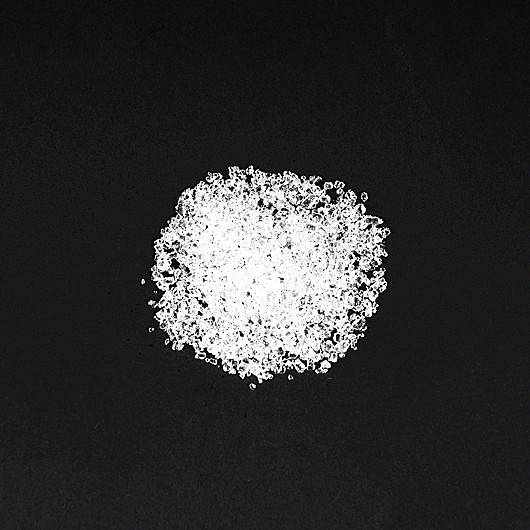
Solid fertilizers are dry, granular, or prilled products that are applied to the soil surface or incorporated into the soil. They are the traditional workhorses of agriculture, known for their ease of storage, transport, and long shelf life. The nutrients in solid fertilizers are released into the soil over time as they dissolve with moisture, providing a sustained feeding period for crops.
Common Types & San Corporation’s Product Line:
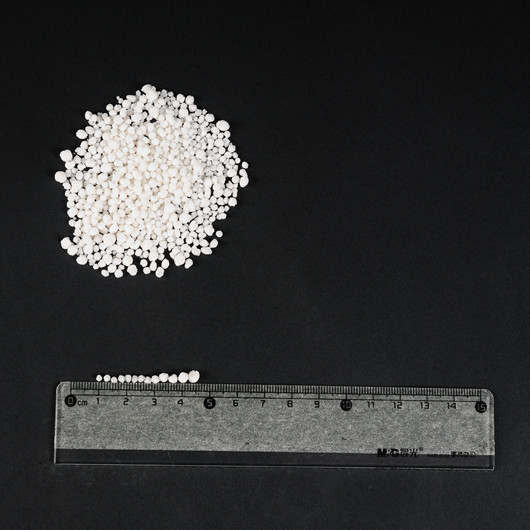
Porous Prilled Ammonium Nitrate (PPAN): Leveraging proprietary technology from France’s KT Company, our PPAN sets a new global benchmark. It features an industry-leading low water content (≤0.05%, surpassing KT’s own 0.2% standard), exceptional resistance to caking, and a high oil absorption rate of 12%-14%—5% higher than local competitors. Its high crushing strength and detonation velocity (>3200m/s) make it not only a superior agricultural product but also a preferred choice in industrial applications. This unique porosity also makes it an ideal base for custom NPK blends.
Chemical Pure Ammonium Nitrate (CPAN): Produced in our state-of-the-art facility, CPAN offers premium-grade purity and physical stability. With a nitrogen content of 34-35%, it’s engineered for consistent performance and minimal hygroscopicity, ensuring reliability from our factory in China to your field anywhere in the world.
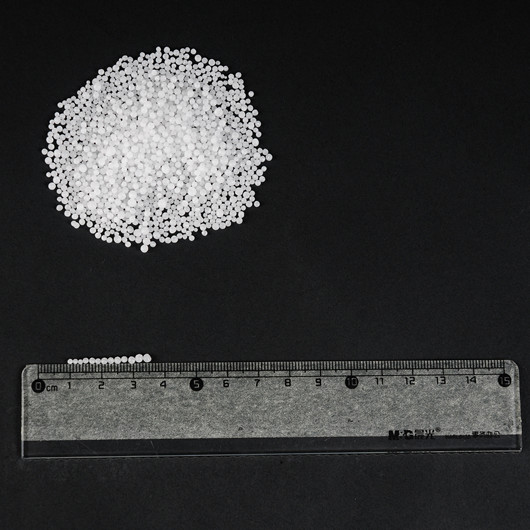
Urea: Our urea is manufactured to international standards, offering the highest nitrogen concentration (46% N) among solid fertilizers, making it a cost-effective bulk nitrogen source.
Calcium Ammonium Nitrate (CAN): This blend of ammonium nitrate and limestone delivers 27% nitrogen along with essential calcium (8-12%). It’s a safer alternative to pure ammonium nitrate and improves soil structure while supplying vital nutrients.
If you'd like to learn more about the differences between solid nitrogen fertilizers, you can also read this article: Calcium Ammonium Nitrate vs Urea
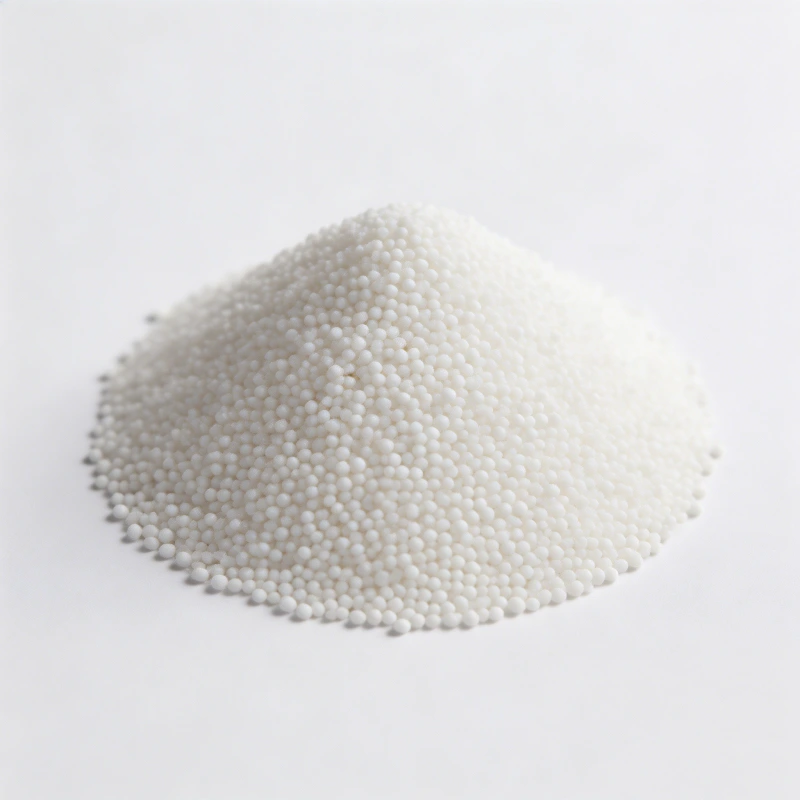
Solid nitrogen fertilizer offers reliable, long-lasting nitrogen release. The compact granular form supports efficient logistics and cost-effective large-scale farming operations worldwide.
What Are Liquid Fertilizers? A Quick Overview
Liquid fertilizers are nutrient solutions or suspensions that are applied directly to the soil or as a foliar spray. They have gained significant traction in modern farming due to their compatibility with irrigation systems (fertigation) and precision application equipment. Nutrients in liquid form are immediately available for plant uptake, offering a rapid response.
Common Types & San Corporation’s Product Line:
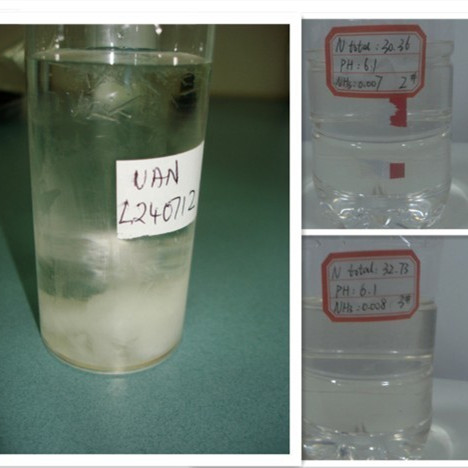
Urea Ammonium Nitrate Solution (UAN): San Corporation was the first enterprise in China to successfully develop and mass-produce UAN. With a planned annual capacity of 300,000 to 400,000 tons, our UAN solution is a clear, stable product containing a balanced mix of urea, ammonium, and nitrate nitrogen (typically 32% N total). This triple-nitrogen form provides both immediate and sustained feeding, and its quality is guaranteed by our rigorous R&D and production protocols.
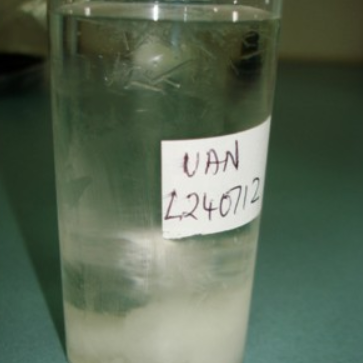
Clear, high-concentration Urea Ammonium Nitrate (UAN) liquid fertilizer. Designed for easy spray application, it provides rapid nitrogen absorption for crops and is widely used in modern agriculture.
The Ultimate Comparison: Pros and Cons
To truly understand which system is right for you, let’s break down the key factors across several critical categories.
1. Application Flexibility & Precision
| Feature | Solid Fertilizers | Liquid Fertilizers |
|---|---|---|
| Application Methods | Broadcast spreading, banding, top-dressing, incorporation. Requires specialized dry spreaders. | Fertigation (through irrigation), foliar spraying, direct soil injection, dribble banding. Uses sprayers or irrigation systems. |
| Precision & Uniformity | Modern GPS-guided spreaders offer good uniformity, but particle size and density variations can cause segregation in blends, leading to uneven application ("nutrient striping"). | Offers superior uniformity. Every drop of solution contains the exact same nutrient ratio, ensuring every plant receives a consistent dose. Ideal for variable rate application (VRA) based on soil maps. |
| Timing Flexibility | Best applied pre-plant or at planting. Top-dressing is possible but less flexible for in-season corrections. | Highly flexible. Can be applied pre-plant, at planting, or multiple times during the growing season to match crop demand precisely (e.g., spoon-feeding). Foliar applications allow for rapid correction of deficiencies. |
The Verdict: Liquids win on precision and in-season flexibility, while solids are simpler for broad, upfront applications.
2. Nutrient Availability & Efficiency
| Feature | Solid Fertilizers | Liquid Fertilizers |
|---|---|---|
| Speed of Uptake | Slower. Granules must first dissolve in soil moisture before nutrients become available. This creates a reservoir effect but can delay initial response. | Immediate. Nutrients are already in ionic form and can be absorbed by roots or leaves within hours of application. |
| Nitrogen Loss Risk | Urea-based solids have a high risk of ammonia volatilization if left on the soil surface without rain or incorporation. PPAN/CPAN have lower volatilization risk. | UAN also contains urea, so surface-applied UAN carries a similar volatilization risk. However, injecting UAN into the soil or applying it through fertigation significantly reduces this risk and boosts efficiency. |
| Overall Efficiency | Can be less efficient due to potential losses (volatilization, leaching from a large initial dose) and uneven distribution. | Generally more efficient. The ability to apply smaller, targeted doses when the crop needs them most minimizes waste and environmental impact. |
The Verdict: Liquids generally offer higher nutrient use efficiency, especially when managed correctly, due to their immediate availability and precise timing.
3. Logistics, Storage & Handling
| Feature | Solid Fertilizers | Liquid Fertilizers |
|---|---|---|
| Storage Requirements | Require dry, covered storage to prevent caking and degradation. Bulk bins or bags are common. Less corrosive to infrastructure. | Require dedicated tanks (poly, steel, or fiberglass). UAN is mildly corrosive and can damage carbon steel tanks over time. Needs protection from freezing (UAN freezes around 18°F / -8°C). |
| Transportation | Easier and cheaper to transport per unit of nutrient because they are denser and don’t require heavy tanks. Standard bulk trailers or bags suffice. | More expensive to transport due to the weight of water (UAN is only 32% nutrient, 68% water). Requires tankers, increasing freight costs. |
| Handling Safety | Dust from handling can be an inhalation hazard. Some products (like AN) have specific safety protocols. Generally stable if stored properly. | Spills are messy and can cause corrosion. Requires PPE to prevent skin/eye contact. No dust issues. |
The Verdict: Solids are the clear winner for logistics and storage simplicity and cost. Liquids demand more specialized (and costly) infrastructure.
4. Cost Analysis: Upfront vs. Long-Term Value
| Feature | Solid Fertilizers | Liquid Fertilizers |
|---|---|---|
| Upfront Product Cost | Typically lower cost per pound of nutrient at the point of purchase. | Higher upfront cost per pound of nutrient, largely due to the cost of water and transportation. |
| Application Cost | Requires investment in or rental of dry spreaders. Fuel and labor costs for field application. | Requires investment in or adaptation of sprayers or fertigation systems. Can often be applied using existing irrigation infrastructure, potentially lowering field pass costs. |
| Long-Term ROI | Lower efficiency can mean you need to apply more total nitrogen to achieve the same yield, offsetting the lower upfront cost. | Higher efficiency and yield potential from precise, timely applications can lead to a better return on investment, even with a higher initial price tag. Reduced risk of crop stress from nutrient deficiency also protects yield. |
The Verdict: Solids appear cheaper initially, but liquids can deliver superior long-term value through increased efficiency and yield.
Competitor Product Analysis: Where San Corporation Excels
Understanding the market landscape is crucial. Here’s how our flagship products stack up against generic alternatives:
San’s PPAN vs. Standard Ammonium Nitrate Prills: Many competitors offer standard AN prills that are dense and non-porous. Our PPAN, built on French KT technology, is in a league of its own. Its ultra-low moisture content (≤0.05%) and high oil absorption (12-14%) create a product that is not only more stable in storage but also a superior carrier for additives. This ensures homogenous blends that won’t segregate in your spreader, a common and costly problem with standard prills. Our PPAN’s physical properties are engineered for performance, giving you a tangible competitive edge in both agriculture and industrial markets.
San’s UAN vs. Generic Liquid Nitrogen: While UAN is a global standard, quality varies wildly. As the pioneer of UAN production in China, San Corporation has perfected the process. Our solution is produced under stringent quality control to ensure absolute clarity and stability, preventing sediment formation that can clog your expensive spray nozzles. When you choose San’s UAN, you’re choosing reliability and predictable, high-efficiency performance in the field.
Which One Is Right For You? A Practical Decision Guide
There’s no universal “best” option. The right choice depends entirely on your specific context.
Choose Solid Fertilizers if you:
Operate on a large scale with established dry fertilizer infrastructure.
Have reliable, dry storage facilities.
Prefer a simple, single or double-pass application strategy.
Are managing a tight upfront budget and prioritize initial cost savings.
Are applying fertilizer in regions with reliable rainfall to incorporate surface-applied urea.
Choose Liquid Fertilizers (like San’s UAN) if you:
Utilize or plan to invest in precision agriculture technologies (GPS, VRA).
Have an irrigation system suitable for fertigation.
Grow high-value crops where precise nutrient management directly impacts quality and profit.
Need maximum flexibility to respond to in-season crop needs or weather events.
Prioritize long-term nutrient use efficiency and environmental stewardship.
The Future is Integrated: A Hybrid Approach
In 2026, the most forward-thinking operations aren’t choosing between solid and liquid—they’re using them together strategically. A common and highly effective approach is:
Base Application with Solids: Use a stable, long-lasting solid fertilizer like San’s CPAN or CAN at planting to establish a foundational nutrient bank in the soil.
Top-Dress with Liquids: Use San’s UAN later in the season, applied via fertigation or a sprayer, to provide precise, timely boosts of nitrogen exactly when the crop’s demand peaks (e.g., during tasseling in corn or fruit set in tomatoes).
This hybrid model leverages the logistical and cost benefits of solids for the bulk of the nutrient load while capturing the precision and efficiency advantages of liquids for critical growth stages.
Conclusion: Partner with a Global Leader for Your Nutrient Success
The solid vs. liquid fertilizer debate isn’t about declaring a winner; it’s about understanding the powerful tools available to you. Both systems have distinct strengths and weaknesses that align with different farming models, budgets, and goals.
At San Corporation, we are more than just a supplier; we are your strategic partner in global agriculture. With an annual ammonium nitrate production capacity of 1.2 million tons and a legacy of innovation since 2002, we are equipped to serve large-scale distributors, government agencies, and agricultural enterprises worldwide. We regularly connect with partners at the Canton Fair and are committed to delivering “the highest quality products at the lowest price with the most secure service.”
Don’t just buy fertilizer—invest in a nutrient strategy backed by a world-class manufacturer. Whether you need the unparalleled quality of our PPAN, the reliability of our CPAN, or the innovative power of our UAN, San Corporation has the products, the capacity, and the expertise to support your success. Contact us today to discuss how our solutions can meet your specific needs and help you thrive in the future of farming.