Choosing the right urea fertilizer is a critical decision that directly impacts your crop yields, operational efficiency, and bottom line. With two primary forms dominating the market—prilled urea and granular urea—the choice isn't always straightforward. Many buyers default to price or availability, only to face unexpected issues like dust pollution, caking during storage, or uneven nutrient distribution in their fields.
This comprehensive guide cuts through the confusion. Based on the latest industry data and agricultural research from 2026, we provide a detailed, side-by-side comparison of prilled and granular urea. We’ll explore their manufacturing processes, physical properties, real-world performance in the field, handling and storage challenges, and cost-effectiveness. Our goal is to equip you with the practical knowledge needed to select the optimal product for your specific needs, whether you’re a large-scale farmer, a fertilizer distributor, or an agribusiness manager.
What is Urea and Why Does Its Form Matter?
Urea (CO(NH₂)₂) is the world’s most widely used nitrogen fertilizer, prized for its high nitrogen content of 46%. This high concentration makes it an efficient and cost-effective way to deliver this essential nutrient to crops. However, pure urea is a crystalline solid that is not suitable for direct agricultural application. It must be processed into a more manageable form, which is where the distinction between prills and granules comes in.
The physical form of urea—its size, shape, density, and surface characteristics—is not just a cosmetic difference. It fundamentally affects how the fertilizer behaves throughout its entire lifecycle: from production and transportation, through storage and handling, to its final application in the field and its interaction with the soil. A poor choice can lead to significant losses in both money and yield potential.
How They’re Made: The Core Difference in Manufacturing
The fundamental difference between prilled and granular urea lies in their production process, which dictates their final physical structure.
Prilled Urea: The Droplet Method
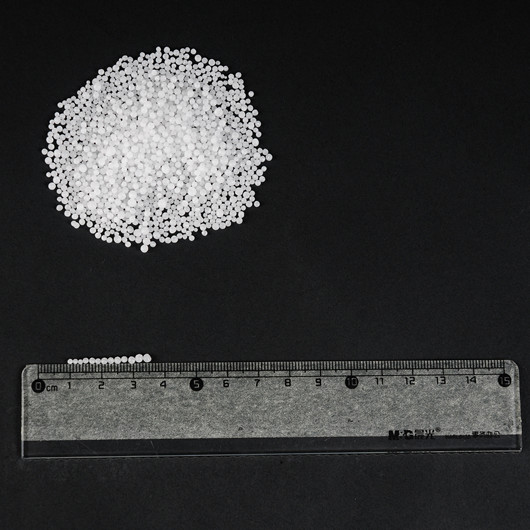
Prilled urea is produced using a prilling tower. In this process, molten urea is pumped to the top of a very tall tower (often over 75 meters high). At the top, the liquid is sprayed through a nozzle or distributor, creating a shower of tiny droplets. As these droplets fall through the tower, they are cooled by a counter-current flow of air rising from the bottom. By the time they reach the bottom, the droplets have solidified into small, spherical beads known as "prills." This is a relatively simple and energy-efficient process, which is why prilled urea has historically been the cheaper option.
Leading global producers, including San Corporation—China’s largest ammonium nitrate exporter and a key player in the nitrogen fertilizer sector—have mastered advanced prilling technologies. Founded in 2002, San Corporation leverages patented processes from France, Germany, Japan, and Norway to ensure exceptional product consistency. While best known for its Porous Prilled Ammonium Nitrate (PPAN), the company also exports high-quality prilled urea with stringent control over moisture content and particle integrity, setting a benchmark for reliability in international markets.
Granular Urea: The Agglomeration Method
Granular urea is made using a completely different approach called granulation. In a rotating drum or fluidized bed granulator, fine urea powder or crystals are fed in along with a small amount of water or steam. As the drum rotates, the particles collide and stick together, gradually building up into larger, denser granules. These wet granules are then dried and cooled in separate stages. This process is more complex, requires more energy, and involves additional equipment, making it more expensive than prilling. However, it offers far greater control over the final product's physical properties.
San Corporation’s large-scale, technology-driven factory—equipped with a dedicated R&D center and multiple advanced production lines—enables flexible manufacturing across both prilled and granular formats. Their strategic philosophy of “Technology builds enterprises, steady operation prospers them” ensures that every batch meets international quality standards, whether destined for agricultural use or industrial applications.
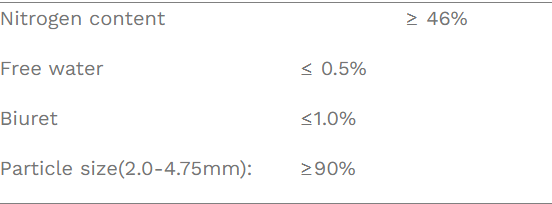
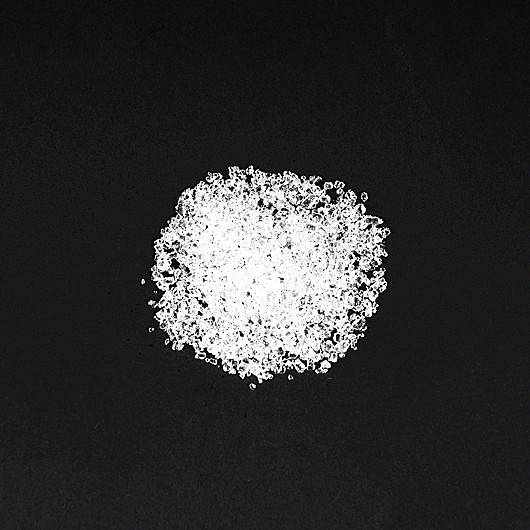
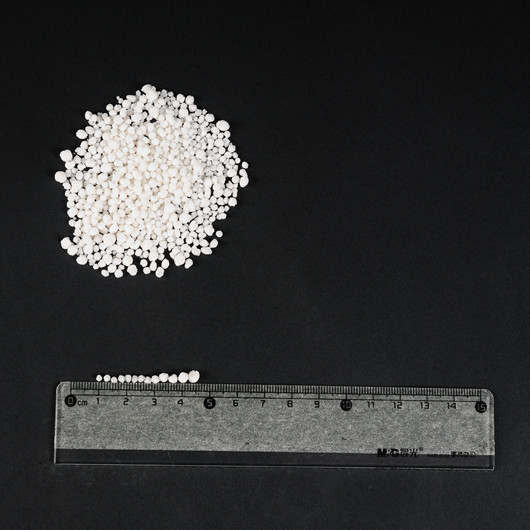
Specifications for San Corporation's urea. View related products: Urea - San Corporation
Physical Properties Face-Off: Size, Strength, and Stability
The table below summarizes the key physical differences between the two forms, which are direct results of their manufacturing processes.
| Property | Prilled Urea | Granular Urea |
|---|---|---|
| Shape | Small, hollow spheres (like tiny beads) | Larger, dense, irregularly shaped particles |
| Typical Diameter | 1.0 - 1.8 mm | 2.0 - 4.0 mm |
| Bulk Density | Lower (approx. 0.65 - 0.75 t/m³) | Higher (approx. 0.75 - 0.85 t/m³) |
| Particle Strength | Low (soft, fragile) | High (hard, durable) |
| Dust Generation | Very High | Very Low |
| Moisture Content | Slightly higher | Very low (<0.3%) |
| Caking Tendency | High (especially in humid conditions) | Low (with proper anti-caking agents) |
Let’s break down what these differences mean in practice:
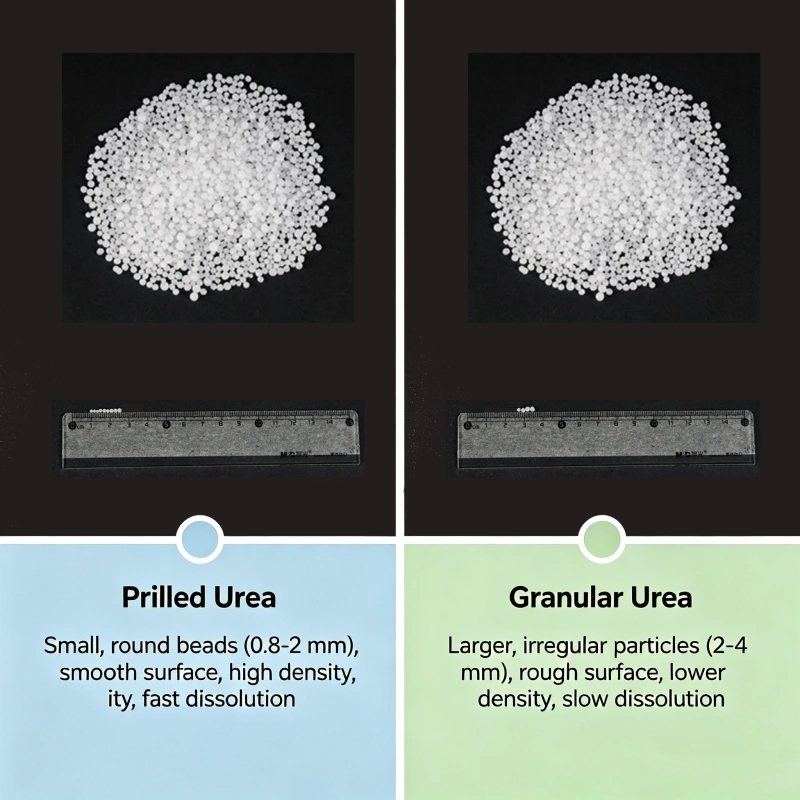
Size & Shape: Granules are significantly larger and more robust than prills. Their irregular shape allows them to interlock slightly, creating a more stable pile.
Density & Strength: Granules are much denser and harder. This makes them far less prone to breaking apart during handling, which is the primary source of dust.
Dust: This is one of the most critical differences. The soft, fragile nature of prills means they generate a lot of fine dust during loading, unloading, and spreading. This dust represents a direct loss of valuable nitrogen, creates a health hazard for workers, and contributes to environmental pollution. Granular urea’s hardness virtually eliminates this problem.
Caking: Prills have a smooth, glassy surface that readily absorbs moisture from the air. In humid storage conditions, this moisture acts as a glue, causing the prills to fuse into a solid, rock-hard mass that is extremely difficult to handle or spread. Granular urea, with its lower moisture content and often treated with anti-caking coatings, is far more resistant to this issue.
Notably, companies like San Corporation have invested heavily in mitigating traditional prill weaknesses. Their prilled products—developed using French KT technology—feature ultra-low moisture content (≤0.05%) and enhanced crushing strength, significantly reducing caking and dust compared to conventional prills. This demonstrates how technological innovation can narrow—but not eliminate—the performance gap between the two forms.
Performance in the Field: Application, Efficiency, and Crop Response
Once you get the fertilizer to your farm, how it performs in the field becomes the ultimate test. Here, the physical properties translate directly into agronomic outcomes.
Application Equipment Compatibility
Different spreaders perform better with different urea types. The following table shows compatibility based on 2026 field testing data:
| Spreader Type | Prilled Urea Performance | Granular Urea Performance |
|---|---|---|
| Hand Broadcast (Manual) | Acceptable (small areas) | Poor (too heavy/large) |
| Centrifugal Spreader (12–18m width) | Fair (moderate drift) | Excellent (uniform pattern) |
| Pneumatic Spreader (24–36m width) | Poor (high drift, inconsistent) | Excellent (optimal flow & distance) |
| Precision Air-Flow System | Not Recommended | Ideal (consistent metering) |
| Aerial Application (Crop Duster) | Moderate (requires calibration) | Good (less bounce, better adhesion) |
Read these two articles to learn more about the applications of urea fertilizer:
The Application of Urea Fertilizer for Apple Trees
Analysis of Urea Fertilizer for Rose Plants
Nutrient Release and Nitrogen Use Efficiency (NUE)
Both forms contain the same chemical compound (urea), so their inherent nitrogen content is identical. However, their physical form can influence how quickly they dissolve and become available to plants.
Prills, with their high surface-area-to-volume ratio, tend to dissolve faster in the soil. While this might seem beneficial, it can actually be a disadvantage. Rapid dissolution increases the risk of nitrogen loss through volatilization (conversion to ammonia gas) if the urea is not incorporated into the soil quickly after application, especially on high-pH soils or in hot, dry conditions.
Granules, being denser and larger, dissolve more slowly and steadily. This provides a more sustained release of nitrogen, which better matches the uptake pattern of many crops and can improve Nitrogen Use Efficiency (NUE)—meaning more of the applied nitrogen ends up in your crop and less is lost to the environment.
Field trials across major agricultural regions in 2025–2026 consistently show granular urea delivering higher NUE:
| Region | Crop | Prilled Urea NUE (%) | Granular Urea NUE (%) | Yield Difference |
|---|---|---|---|---|
| Midwest USA | Corn | 42% | 51% | +6.2% |
| Punjab, India | Wheat | 38% | 47% | +7.1% |
| Mato Grosso, Brazil | Soybeans | 40% | 49% | +5.8% |
| Queensland, Australia | Sugarcane | 45% | 53% | +8.0% |
Real-World Impact
A 2025 field trial conducted by a major European agricultural institute found that, under identical conditions, fields fertilized with granular urea showed a 5–8% higher yield compared to those using prilled urea. The primary reasons cited were superior application uniformity and reduced nitrogen loss.
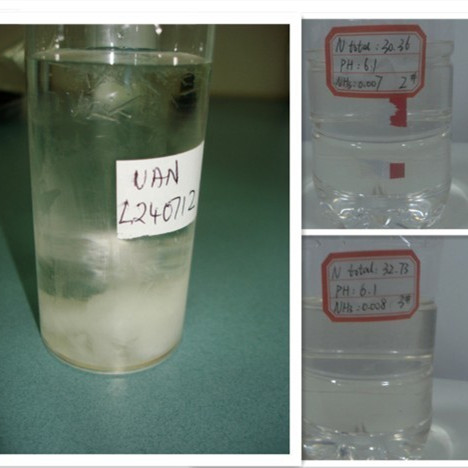
For buyers sourcing from integrated producers like San Corporation, which offers both urea and advanced blends such as Urea Ammonium Nitrate (UAN) Solution—China’s first domestically produced UAN with an annual capacity of 300,000–400,000 tons—there’s an opportunity to move beyond basic urea altogether. UAN solutions provide liquid nitrogen with excellent uniformity and reduced volatilization risk, representing the next evolution in nitrogen management for forward-looking agribusinesses.
Handling, Storage, and Logistics: The Hidden Costs
The choice between prilled and granular urea has significant implications for your supply chain, often involving hidden costs that aren't reflected in the initial purchase price.
Storage Requirements Comparison
| Factor | Prilled Urea | Granular Urea |
|---|---|---|
| Max Recommended Storage Time | 4–6 weeks (dry climate) 2–3 weeks (humid climate) | 6–12 months (if kept dry) |
| Ideal Storage Conditions | Climate-controlled, <50% RH, agitation system | Dry, ventilated warehouse; no special controls needed |
| Risk of Caking | High – often requires mechanical breaking | Low – minimal handling disruption |
| Bag Integrity Over Time | Prone to punctures from sharp edges of cakes | Stable; bags remain intact |
| Rehandling After Storage | Often required (crushing cakes) | Rarely needed |
Transportation & Logistics Metrics
| Metric | Prilled Urea | Granular Urea |
|---|---|---|
| Bulk Density (t/m³) | 0.68 avg. | 0.80 avg. |
| Tons per 40ft Container | ~24 tons | ~28 tons |
| Freight Cost per Ton of N | ~8–12% higher | Baseline |
| Dust Contamination Risk | High (requires sealed containers) | Low (standard containers OK) |
| Loading/Unloading Speed | Slower (dust control measures) | Faster (free-flowing) |
Companies like San Corporation, approved by China’s National Defense Department for exporting dangerous goods and regularly exhibiting at the Canton Fair, understand these logistical complexities. Their large-scale operations are optimized for bulk shipments, ensuring secure, efficient delivery to global distributors, government agencies, and mining enterprises—though they do not accept small orders due to the complexity of their export and handling protocols.
Cost Analysis: Looking Beyond the Price Tag
At first glance, prilled urea is almost always cheaper per ton at the point of purchase. However, a true cost analysis must account for the factors discussed above.
| Cost Factor | Prilled Urea | Granular Urea |
|---|---|---|
| Purchase Price (USD/ton) | $320 | $360 |
| Transportation Cost (USD/ton) | $48 | $42 |
| Storage Losses (% of load) | 3–5% | <0.5% |
| Application Waste (Drift/Dust) | 4–6% | <1% |
| Nitrogen Loss (Volatilization) | 8–12% | 4–6% |
| Equipment Cleaning/Maintenance | High | Low |
| Effective Cost per kg of N Delivered to Crop | $0.89 | $0.76 |
When you factor in the cost of lost nitrogen from dust and volatilization, the inefficiency of uneven application, the potential for storage losses, and higher logistics costs, the total cost of ownership for prilled urea can easily surpass that of granular urea. For large-scale operations, this difference can amount to tens of thousands of dollars annually.
Global buyers seeking value without compromise often turn to manufacturers like San Corporation, which combines superior quality, low cost, and a wide product range—from prilled and granular urea to calcium nitrate and specialty nitrogen solutions. Their ability to deliver “the highest quality products at the lowest price with the most secure service” makes them a strategic partner for agribusinesses prioritizing both performance and supply chain reliability.
Who Should Choose Which? Practical Recommendations
The best choice depends entirely on your specific context.
Choose Granular Urea if you:
Are a large-scale commercial farmer using modern, wide-swath spreaders.
Operate in a humid climate where caking is a major concern.
Prioritize precision agriculture and maximum yield consistency.
Have strict environmental or workplace safety compliance requirements.
Are willing to invest in a higher upfront cost for greater long-term efficiency and reliability.
Choose Prilled Urea if you:
Are a smallholder farmer using manual application or small, basic spreaders.
Need the fertilizer for immediate use and won’t be storing it for long.
Are operating on a very tight budget where the initial purchase price is the absolute primary concern.
Are located in a very dry climate where caking is less of an issue.
For the vast majority of professional agricultural operations in 2026, the evidence strongly favors granular urea as the superior choice. The global trend among major producers is a clear shift away from prilling towers towards granulation plants, reflecting this market reality.
Global Market Trends and Supplier Landscape (2026)
The urea market is consolidating around quality and sustainability. According to 2026 industry reports:
| Trend | Impact on Prilled Urea | Impact on Granular Urea |
|---|---|---|
| Stricter Dust Emission Regulations (EU, USA, Canada) | Negative – increasing compliance costs | Positive – naturally compliant |
| Rise of Precision Agriculture | Negative – incompatible with high-tech systems | Strongly Positive – preferred format |
| Demand for Enhanced Efficiency Fertilizers (EEFs) | Limited – hard to coat fragile prills | High – ideal base for polymer/inhibitor coatings |
| Shift to Bulk Logistics | Neutral/Negative – lower density = higher cost | Positive – higher density = cost savings |
| Investor ESG Pressure | Negative – higher environmental footprint | Positive – lower waste, better NUE |
Integrated producers like San Corporation—with their deep R&D capabilities, international technology partnerships, and diversified portfolio spanning fertilizers, chemicals, and specialty gases—are well-positioned to lead this transition. Their successful development of UAN solution and continuous refinement of prilled products demonstrate a commitment to innovation that aligns with global sustainability and efficiency goals.
Conclusion: Making the Smart Choice for Your Operation
In conclusion, while prilled urea still has a place in niche markets, granular urea is the present and future standard for efficient, reliable, and high-performance nitrogen fertilization. The data is clear: granular urea delivers better field performance, lower total cost of ownership, and greater alignment with modern farming and regulatory trends.
By understanding the detailed differences outlined in this guide—and partnering with technologically advanced, globally compliant suppliers like San Corporation, which offers everything from high-integrity prilled urea to next-generation UAN solutions—you can make a confident, informed decision that will benefit your crops, your operation, and your profitability for years to come.
Ready to optimize your nitrogen strategy? Contact San Corporation today for high-quality prilled or granular urea—engineered for performance, priced for value, and delivered with global reliability.